
Creativity is your birthright
AI can’t take away your innate ability to make, create or perform

I started this essay a few days before reading Lawrence Winnerman’s brilliant piece on how wholly unprepared we are for the impact of AI.
It’s a good companion piece to the following, especially if you are already feeling a paralyzing sense of doom about what AI has done and is doing to creative work. I don’t know that it’s exactly reassuring, except that it is honest, and I find honesty reassuring. We can’t even begin to figure out how to fix a problem if we don’t first admit the problem exists.
And humanity is staring down a pretty terrifying problem.
The other day I was talking to my son about my favorite things to do, and one of those things is going to see live theater. He hasn’t been to a lot of live performances (it’s not always something we can afford) and so I was trying to explain the difference between seeing a play and watching a movie in a theater or on TV.
Me: “When you’re watching a play, there are real people up on stage, and the story is happening right in front of you. There’s this interplay between the actors and the people in the audience, a special kind of conversation is happening. This is unique to theater. Even though the actors have memorized their lines, even though there’s a script, even though there’s a plan, everyone knows that anything could happen.”
Ten year old: “Anything? Really?”
Me: “Anything.”
I’m not sure I did it justice.
We need to have important conversations about what AI is doing to creators. So many of us are terrified we’re being replaced, that our ability to write books and perform music and create art is being stolen from us, and that fear is justified. Our music, storytelling, and art is driven by capitalism. We most frequently witness only the kinds of art that makes lots of money (big Hollywood movie productions starring the same ten actors who are in every other movie, albums written by already famous musicians who’ve already won multiple awards, etc). This type of art is cheaper and easier to create using AI. And it’s true that lots of people are losing their jobs and will continue to lose their jobs (see Lawrence’s essay for more on this). These conversations need to keep happening. However, there is a significant fallacy in the way we tend to discuss the problem.
We say that AI books, movies, music are missing something, and they are. We say they are missing a soul, and we’re right. Criticism of AI generated work is valid. But when we only talk about the validity and artistic value of what AI makes, when we only focus on the final product, we are missing the point. Art, music, poetry, story-telling, and performance do not exist purely for us to consume them.
It’s true that consuming art is something humans love. Especially those of us who don’t see ourselves as artists or musicians or writers. I’m talking about people who sing out loud in the car, but who would never risk singing in front of anyone other than their toddler in the backseat or the dude who pulls up next to them at a stoplight. I’m also talking about people who love coloring books but who haven’t let themselves draw a picture with crayons since 3rd grade, when a teacher or parent criticized the way they drew their dog’s ears. People who excel at telling a story so funny it brings their friends to tears, but who would never dream of trying stand-up.
We’re taught, somewhere along the way, that we only have the right to create if we can create something deemed good enough to spend money on. We’re also taught that the second we stop creating marketable products, we might as well stop creating altogether because our work no longer has value.
None of that is true.
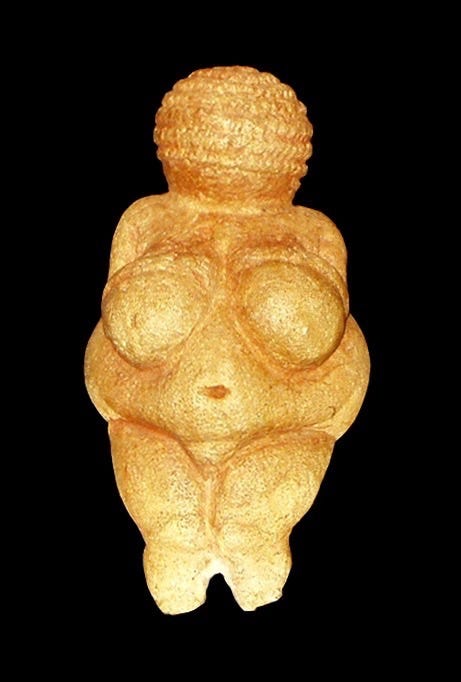
Nobody was buying cave paintings of deer, or pocket-sized ladies carved out from rocks, or drums made with animal skins when humans started making these things. Humans have always made art, not just because we love to look at it and listen to it, but because making things we personally find beautiful is integral to who we are as a species.
When a child learns to play the trumpet, the primary reason she does so is not because lots of people want to spend money on trumpet music so we are fulfilling a need in the market by training more trumpet players. A child learns to play the trumpet because she’s intrigued by the way the brass reflects the light on the bell, by the way the buttons go up and down when you press them, by the way it sounds when someone else makes noises on it. She picks up the trumpet, learns what all those buttons do, figures out what sounds good, what sounds bad. She learns the importance of practicing to sound better, how to read and perform music written by others, how to write and perform the music she hears in her head, how to interact with an audience, how to write her songs down so other people can play them.
Most importantly, she learns how all of that makes her feel, what it does to her emotions, her memory, her intellect.
All of that is her birthright as a human being.
No matter how many AI trumpet sounds we create, no matter how beautiful those sounds may be, our desire to consume those sounds will never outpace our desire to be the one picking up that instrument and learning to play it.
Imagine you get a group of humans together in a room and take away their phones (and their TVs and their music streaming service and their e-readers). None of these people are professional artists, poets, or musicians—let’s say they’re all white collar workers (I wrote the previous sentence before reading Lawrence’s essay, and now it sends chills down my spine. Read it if you haven’t yet).
Tell them they’re going to be in that room for 8 hours (and let’s also assume this is voluntary not coerced). Show everyone where the bathroom is and where the snacks are, make sure there’s some paper, crayons, and a piano, then lock the door behind you.
Can you imagine what would happen?
I imagine that first, they probably start telling stories to each other. Maybe about the crazy traffic on the way in that morning, maybe somebody’s kid lost a tooth last night, or a funny thing happened on the way to the gym.
Then, as they get a little more bored, maybe somebody picks up the crayons and starts doodling, and someone else joins them. Maybe they talk to each other about what they’ve decided to draw. Maybe they draw each other.
Before you know it, somebody else is plinking out “Heart and Soul” on the piano, and someone else is singing along, and they’re laughing about how learning “Heart and Soul” is what my teenager calls a “cannon event.” Probably a few other folks ball up some paper and shoot hoops into the trashcan, or invent some other kind of game to play (even I haven’t yet made games and sports a part of this conversation, maybe they should be, as that’s it’s own form of creation and performance).
AI can never, ever take away our art, our music, or our stories—not because it can’t make things we like to consume (it absolutely can) but because it can’t replace our need to create and perform. Not unless we let it—and there’s no reason we have to.
In my town, there’s a lovely little space called Butterscotch Studios. It’s inside of an old house, and when you enter the space, you feel like you’ve just walked in to a good friend’s living room. They teach music lessons, host workshops (one of which I teach), host concerts, and sell local art.
After school gets out, the place is crammed full of kids carrying instruments in and out, and parents waiting while their kids take lessons. In the evenings, it’s full of people watching their neighbors and friends perform music. Once a month, it is a space where I’m doing my best to nurture and support local writers. It’s always full of art made by people in the community.
They created a place to create, and it’s always, always full. Even if something happened to this place, the people who fill it aren’t going anywhere. We’re going to keep learning to play instruments, keep paining, sculpting, and drawing, and we’ll keep writing down poems and stories and songs. We’ll keep sharing the things we create with each other, long after all the tech industry has devoured itself and made all our busywork obsolete.
I’m not saying we shouldn’t fight the way AI is being used. We absolutely should. We are stuck inside of capitalism and we need to survive, and many of us depend on people buying what we create or we don’t eat and can’t pay rent. Many of us are staring down the reality of losing our jobs, or our or parents losing our jobs, our kids graduating from college and being unable to find a job. That’s a massive problem and it needs to be solved. But there are ways to try and solve that problem without buying into the lie that AI will replace creators. It can’t, not unless we give up.
So please, please.
Sing a song today, loudly, in your car or in the shower or to your grandchild. Buy a pack of crayons and a notepad and make the colors do something that pleases your brain. Tell someone a story—something that happened to you, or something you made up, or something in between.
Make. Create. Perform. Not because the thing you are creating needs to exist, but because you need to exist, and in order to exist, to be fully real and of the world, not just in it, you must create.
They can never take that away from us unless we let them.
(And read Lawrence’s essay).
Other important things happening on Planet Erin:
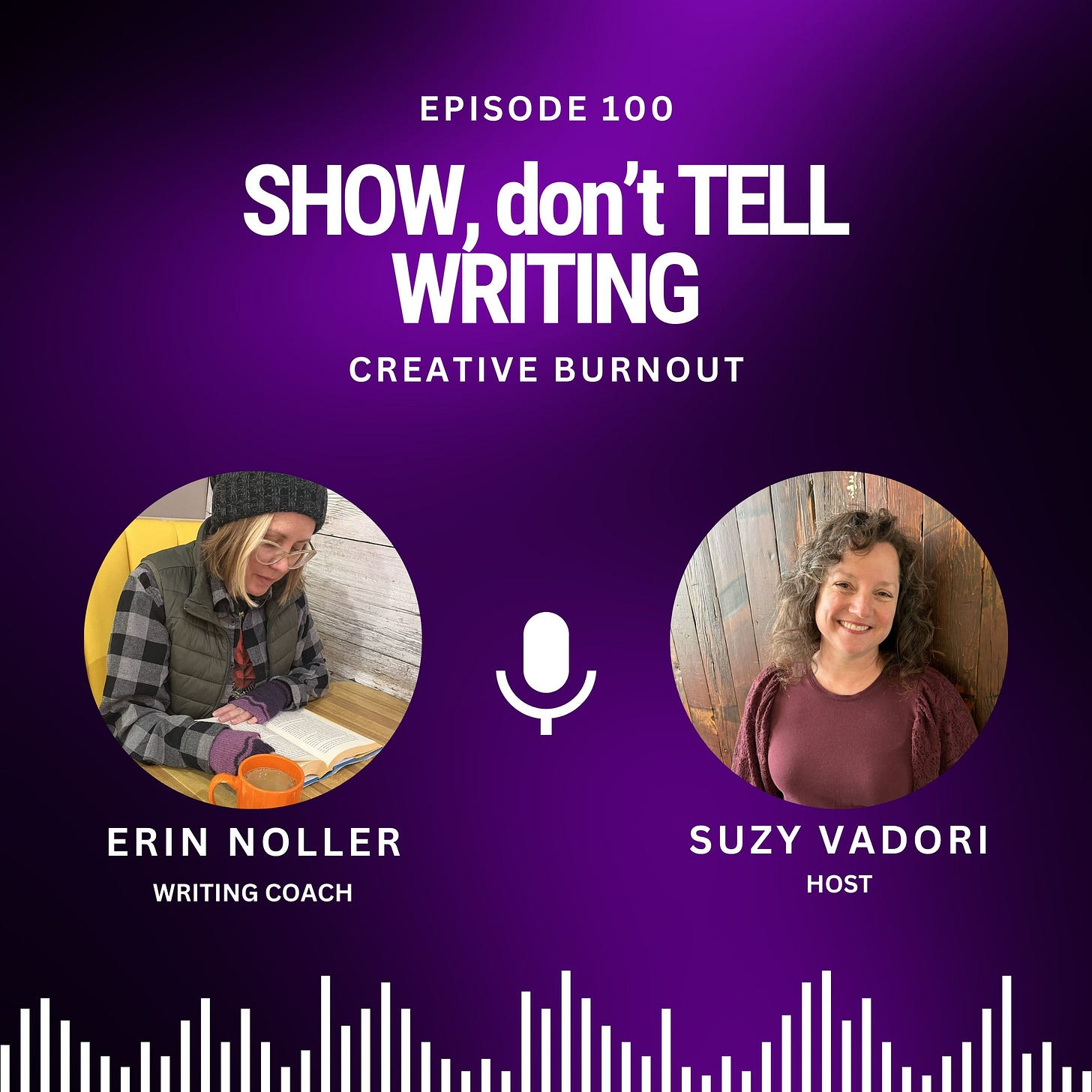
I was on a podcast! Me and my friend Suzy Vadori of the Show don’t Tell Writing podcast discussed creative burnout — what it is and what to do about it:
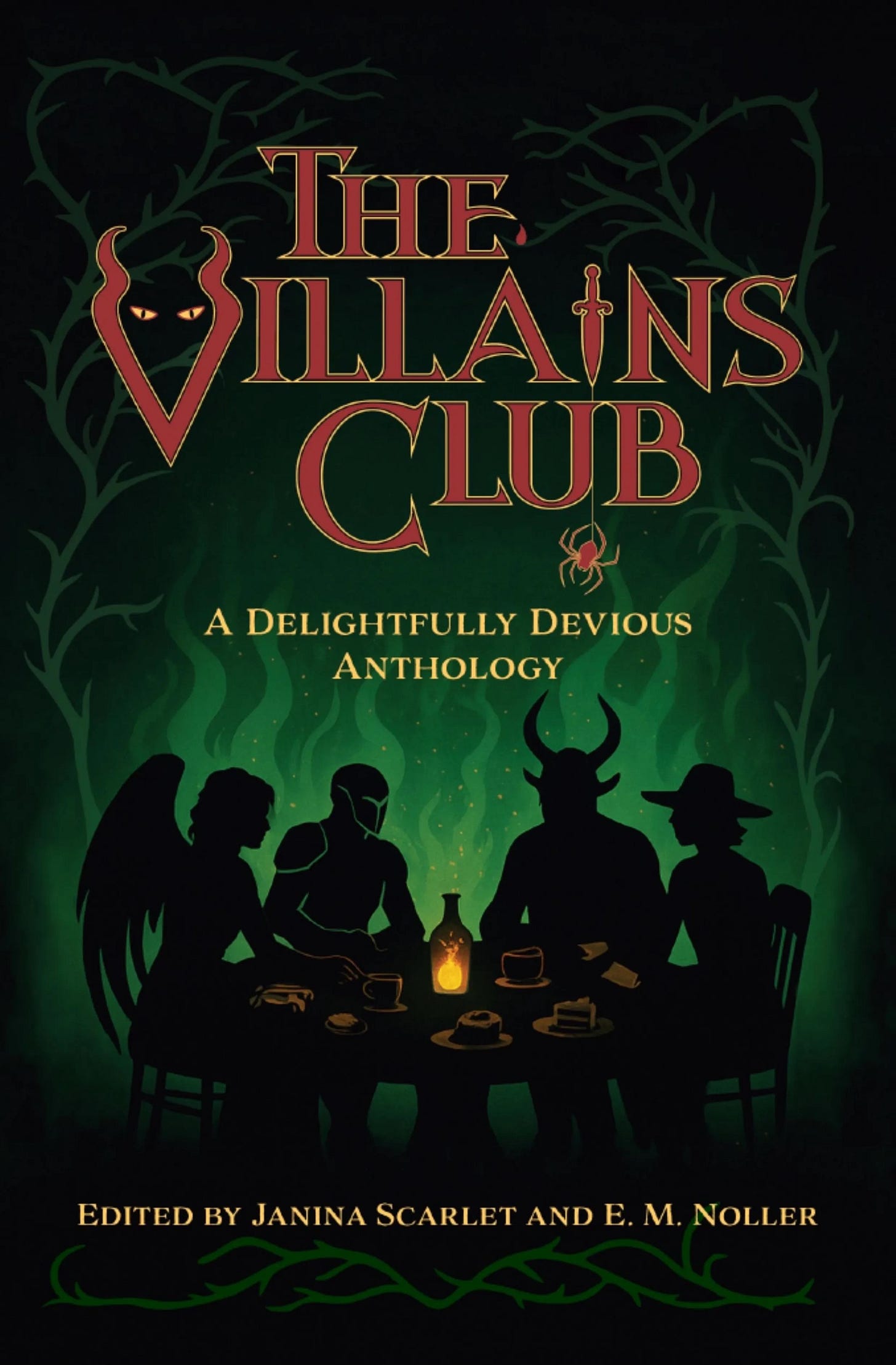
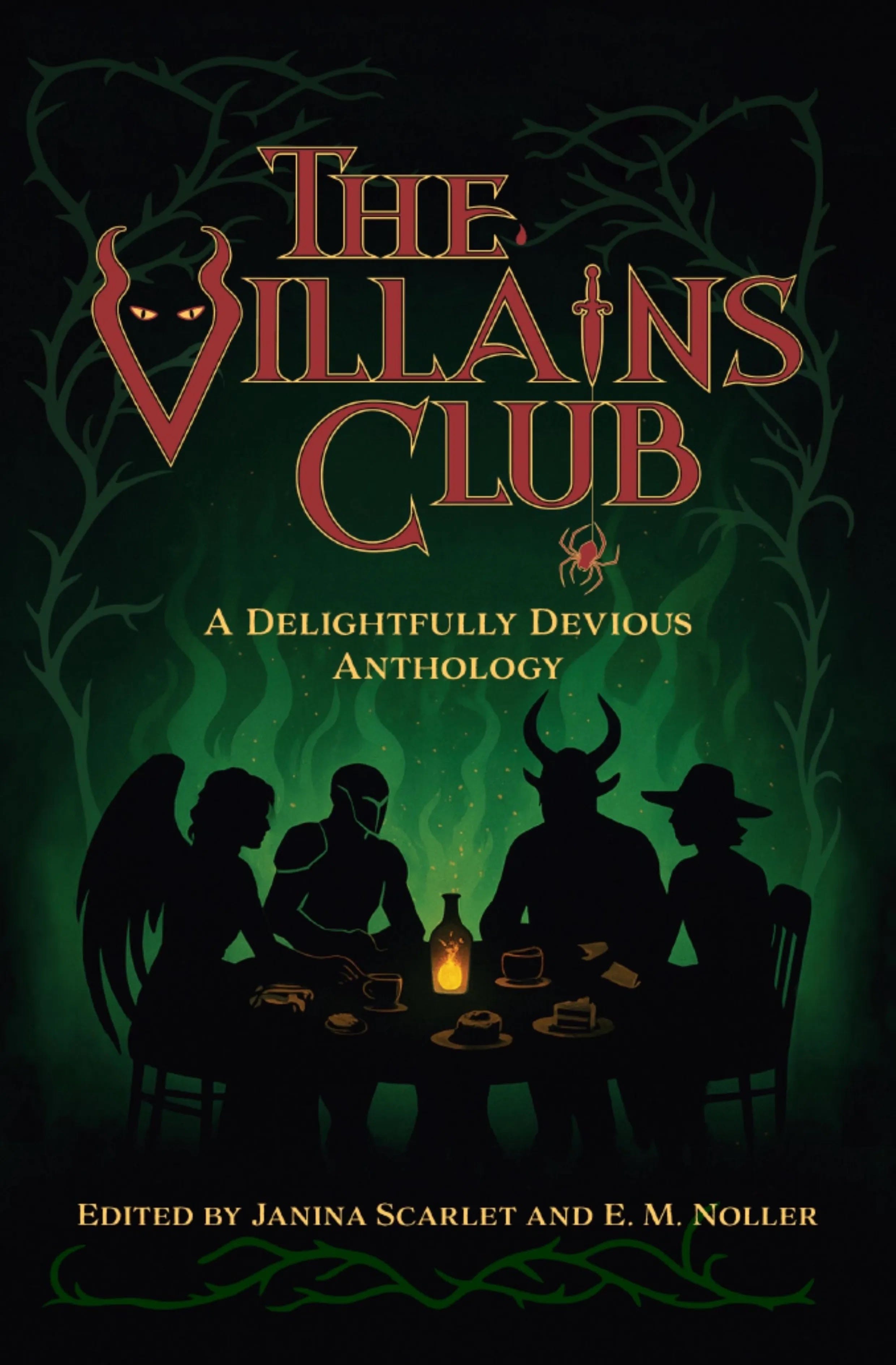
I co-edited an anthology! Find copies of The Villain’s Club in all the online places where books are sold, and also in several small bookshops across the country (mostly in So Cal and the Boulder Area in Colorado. If your bookstore or library doesn’t have copies, you can request them!)
I’m hosting a monthly local workshop at Butterscotch Studios!


A short story of mine, “What the Tide Brings,” is going to be published in an anthology forthcoming from Twenty Bellows Press! They have been lovely to work with so far — more details to come, including preorder links, etc., as soon as I have them.
I think that’s it for now — but as always, take good care of yourselves, and KEEP WRITING.
~Erin
I agree with you completely. It's so important -- not just because of AI -- for us to remember that the creative act is reason enough to create, and that the opportunity to connect with one another through that act can never be taken from us if we don't lay down and roll over and let it be taken. Thank you for sharing! I'm headed over to read Laurence's essay right now!
Yes to all of this! As you know, I someday hope to write a book about these themes. 😉 And while the financial consequences of AI are definitely concerning--fewer people paid for creative work, fewer people able to afford to do creative work--I find the perspective that AI will take away our desire to do creative work just...odd? I take pottery classes and I love throwing mugs. I'm getting pretty good at it, and I bring different ones to the coffee shop. It's not because I need a mug. I have plenty of mass-produced coffee mugs, and if I needed another one, I could buy one for Way less that I spend on pottery class. Or I could stop and use the mugs I've already made. But I keep going because there is more to learn! The allure of the wheel is intoxicating! There are so many more things to learn--a lifetime of them. I do pottery because I like *doing* pottery.
I could say so much more about the importance of creative outlets, how I only really unlocked my creative self once I *stopped* aiming for marketability or the prospect of selling my work. I'll spare you all that, and end with the fact that I don't think people who don't do art understand how cathartic art can be, and that it doesn't have to be "good" to be so. Our culture likes to think of art as some frilly little extra, a side of guacamole for those who can afford it, instead of an intrinsic human act.